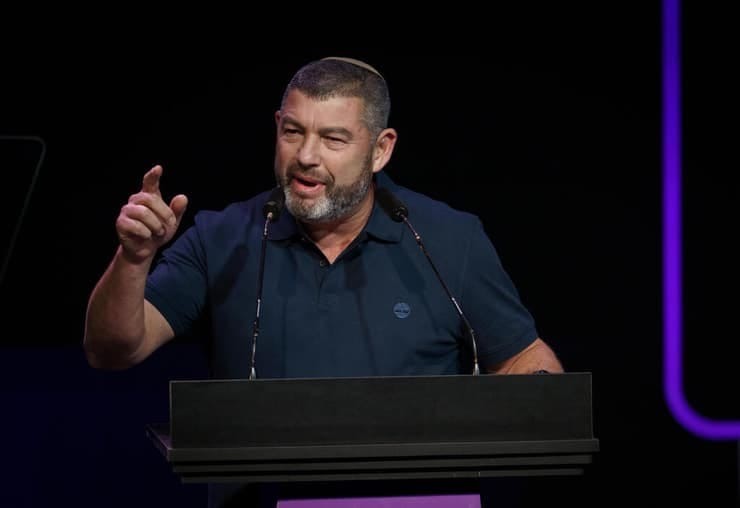
The founder of Amcha Yisrael is competing for a place in an already crowded political camp, while disagreements over security, military service and coalition politics define his new party’s identity.
When Ofer Winter launched Amcha Yisrael in August 2026, he entered an unusually competitive political environment.
Israel’s right-wing electorate was already represented by established parties with different approaches to religion, national security, economic policy and political leadership.
Winter’s decision to establish a new party created another political option within that field.
It also immediately drew criticism from Prime Minister Benjamin Netanyahu, who warned that additional right-wing lists might divide the vote.
The dispute exposed one of the tensions at the center of the 2026 election campaign: the relationship between political representation and electoral strategy.
For Winter, the founding of a separate party reflected his stated view that existing political institutions were not adequately addressing the priorities of many right-wing voters.
For Netanyahu and other critics, the emergence of additional parties raised concerns about votes being lost if smaller lists failed to meet Israel’s electoral threshold.
Neither side’s argument resolves the question of how much political representation can be accommodated within a proportional electoral system.
A Different Candidate List
One distinctive feature of Amcha Yisrael is its composition.
Winter selected Arab-Israeli public advocate Yoseph Haddad for second place.
The list also includes television journalist Netali Shem Tov, former Jerusalem deputy mayor Fleur Hassan-Nahoum and several figures connected to military service, civic activity and bereaved families.
The inclusion of Haddad attracted particular attention.
A Christian Arab citizen of Israel and wounded IDF veteran, Haddad is known for advocating Israel’s position in international public debate.
His candidacy reflects the party’s attempt to combine a nationalist political platform with a definition of civic partnership that extends beyond Jewish identity.
Whether that approach could translate into meaningful influence on policy and representation would depend on the party’s future legislative actions.
Security and the Draft
Winter’s political platform emphasizes national security and the responsibilities associated with military service.
Amcha Yisrael opposes Palestinian statehood, advocates an assertive security doctrine and supports greater integration of Haredi Jews into military service.
The latter issue is particularly significant in Israeli politics.
Exemptions and recruitment arrangements for ultra-Orthodox men have been debated for decades, generating disputes over religious autonomy, equality of obligations and the manpower needs of the armed forces.
Winter’s military background has made the issue a prominent part of his political identity.
But advancing a policy of wider military recruitment would require legislative decisions, administrative arrangements and agreement over enforcement.
Conflict Within the Right
The creation of Amcha Yisrael has produced competition not only between ideological opponents, but within the broader right-wing camp.
Some of the strongest criticism of Winter’s decision to run independently has come from politicians who broadly share elements of his national security outlook.
That competition illustrates the difference between agreement on political principles and agreement on how to exercise power.
Winter has emphasized that he identifies with the right, while arguing that participation in government should depend on policy commitments rather than political appointments alone.
His party has promoted proposals involving national security, military service, judicial reform and an investigation into the failures surrounding October 7.
Critics question whether the creation of another electoral list is the most effective way to advance those positions.
Military Experience Meets Parliamentary Reality
Winter’s political identity rests heavily on his military career.
But parliamentary politics operates through coalition agreements, committees, legislation and negotiations among parties representing different constituencies.
A successful military command career does not automatically provide a record of legislative performance.
Winter enters the election with extensive experience in military operations and national security institutions, but without a comparable history as an elected lawmaker.
That distinction will be relevant to evaluating his political career.
The central question is not simply how Winter describes the changes he seeks.
It is how the policies proposed by Amcha Yisrael would function in practice, what compromises they might require and how they would be evaluated by the public.
His decision to establish a new party has already added another dimension to Israel’s electoral debate.
The longer-term significance of that decision will depend on developments after the election, not only on his reputation as a former commander.
Amcha Yisrael